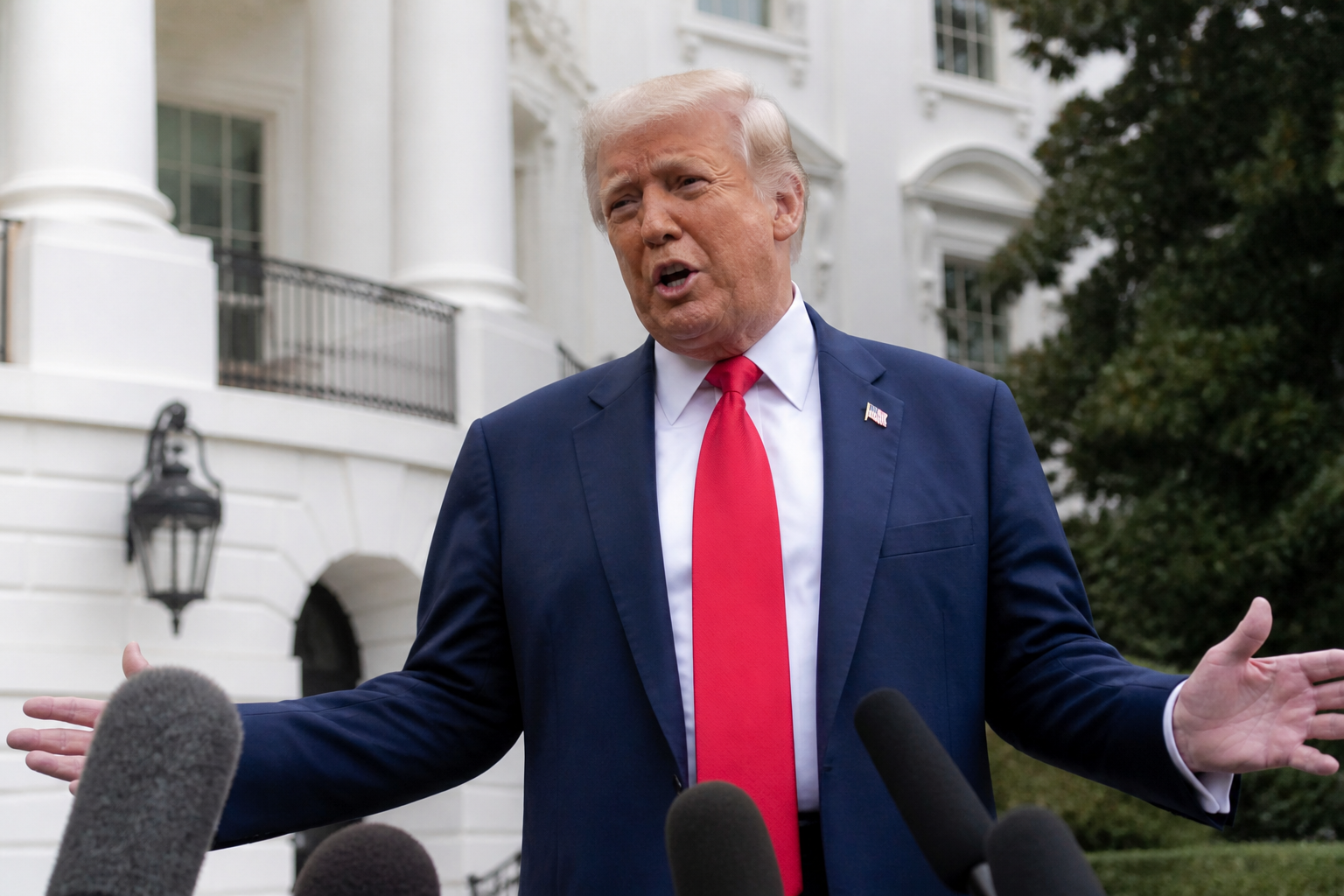
US President Donald Trump criticised the Federal Reserve’s latest interest-rate increase on Wednesday, saying policymakers were “doing the wrong thing” after the central bank unanimously raised borrowing costs for the first time since 2023.
Trump said US rates should be 1% or lower and described the wider Fed board as hostile and political, although he maintained confidence in Chair Kevin Warsh.
The disagreement now extends beyond Wednesday’s quarter-point move.
Fed officials are signalling that inflation may require further tightening this year, while Warsh’s own language suggested September was unlikely to be a one-off increase.
Trump blames the board but still backs Warsh
Trump told reporters he was still “relying on Kevin”, but directed most of his criticism at the broader committee.
Trump also said he had spoken with Warsh before the decision.
“You might as well vote with the board because it’s just not going to matter,” Trump said he told him.
The complication is that Warsh was not a reluctant dissenter who was overruled. He joined the 12-0 vote to raise the federal funds target range by 25 basis points to 3.75%-4%.
Warsh then defended the move publicly, calling inflation too high and saying recent readings had not convinced him that underlying trends had improved.
Trump, meanwhile, repeated his preference for rates around 1% or below, putting his desired policy path far below the Fed’s current setting.
Wall Street heard a more hawkish message
The Fed’s decision mattered, but the language around it mattered more.
Warsh described the increase as removing a degree of accommodation, wording that suggested policymakers do not yet view monetary policy as clearly restrictive.
Updated projections showed 16 of 18 officials expect at least one more quarter-point increase before year-end.
Warsh did not submit an individual rate projection, however, so the dot plot cannot be read as his personal forecast for another move this year by itself.
Michael Gapen, Morgan Stanley’s chief US economist, told The Wall Street Journal that if policymakers do not think policy is restrictive while oil remains elevated, “you’ve got some work to do.”
Morgan Stanley subsequently shifted towards expecting additional tightening.
Krishna Guha of Evercore ISI offered a similar reading. In comments carried by Bloomberg, he called Warsh’s press conference “coherent, confident and consistently hawkish”.
That interpretation helps explain why markets focused less on the size of Wednesday’s move and more on whether the Fed is entering a new tightening phase.
Trump wants 1% while the Fed signals higher for longer
The distance between Trump’s preferred rate path and the Fed’s current stance is now unusually wide.
Trump wants rates around 1% or lower. The Fed has just lifted its target range to 3.75%-4%, and most policymakers see another increase this year.
Brian Rehling of Wells Fargo Investment Institute told Business Insider that the dot plot showed rates could “move higher and remain elevated for longer than investors previously expected.”
That is the economic disagreement at the centre of the story.
Trump continues to back Warsh personally and has said he wants the Fed chair to act independently.
Meanwhile, Warsh has stressed the central bank’s responsibility to restore price stability and stay within its monetary-policy remit.
Another hike would keep that disagreement alive, particularly if inflation remains stubborn over the coming months.
The post Trump backs Warsh but tears into Fed board after hike: 'they’re doing it wrong' appeared first on Invezz